Cleaning Piotr Kowalski’s NOW
On Wednesday, January 31st, we as a class of art students performed Maintenance art by cleaning Piotr Kowalski’s NOW on our campus at California State Long Beach University. This assignment was a tribute to Mierle Laderman Ukeles’ work of cleaning the steps of the Wadsworth Atheneum Museum in Hartford, Connecticut. The work of our on our campus, NOW, is notorious for being filthy. Seeing it as I passed by day after day took away from my experience of the art itself. I remember seeing it for the first time and being in amazement at what a large sculpture it was but as I got nearer, noticing the finger painted messages in the sculptures dust. This took away from my analyzation of the piece as a whole and made me focus on the details that should not have been there. So when this idea of performing Maintenance Art on the sculpture came up in class, I was pleased to be part of such an experience.
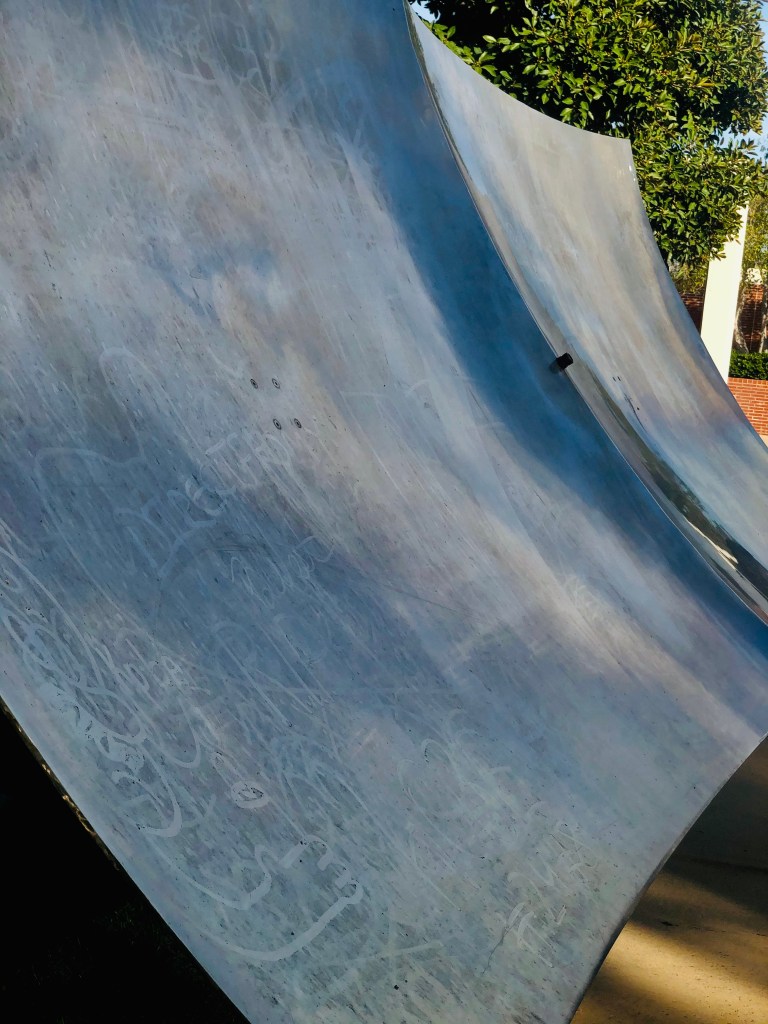
Coming up once again to the sculpture I had ignored after that first year, I once again noticed the markings in thick layers of dust on the sculpture. My anticipation grew when more and more students came and stood or sat near the sculpture. Once class started, students began grabbing paper towels and dipping them in the provided water, myself included. It felt extremely satisfying to be able to see that layer of debris come off of the sculpture, and I understood the idea of cleaning this abstract work. It was impactful to see how performing a simple action could make such a difference in an art piece. What was even more impactful was seeing the group effort of the class working together to achieve this goal. It was truly astounding to see the sculpture transform in a matter of minutes. Seeing the sculpture and being able to experience it in its intended view was relieving.
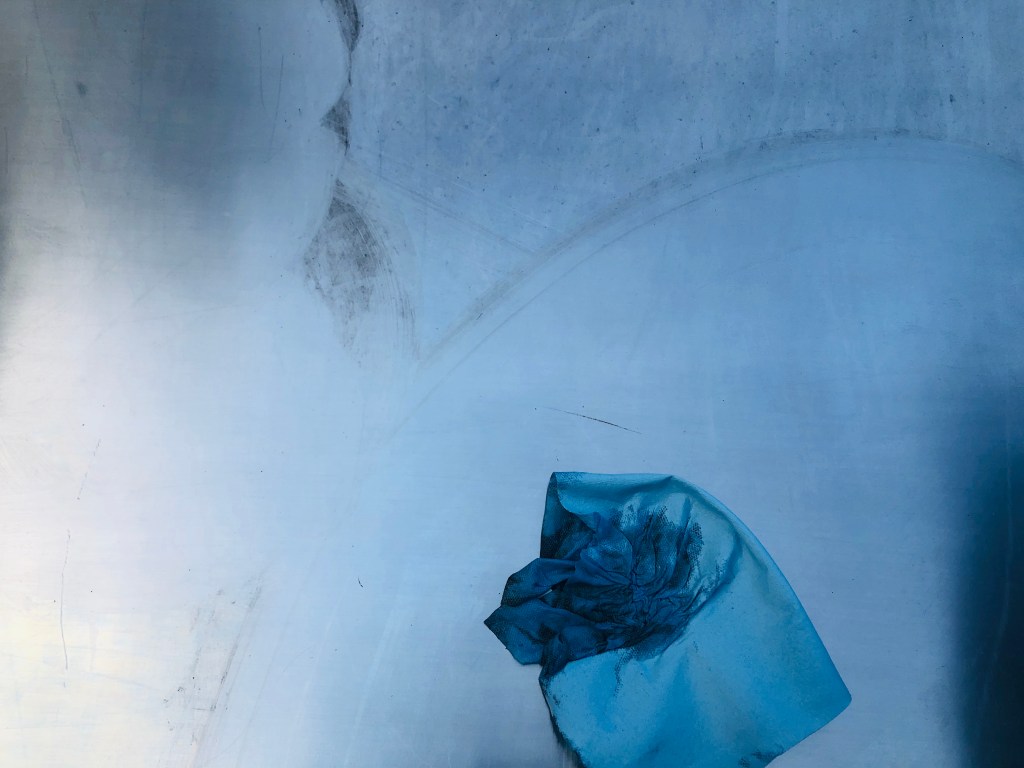
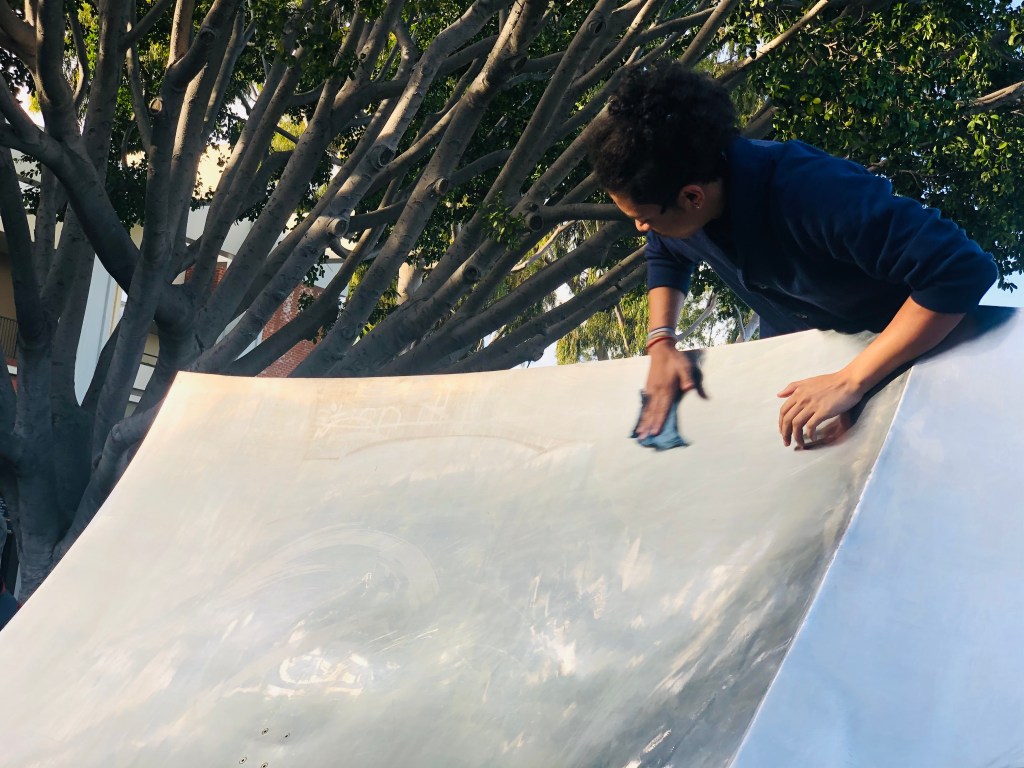
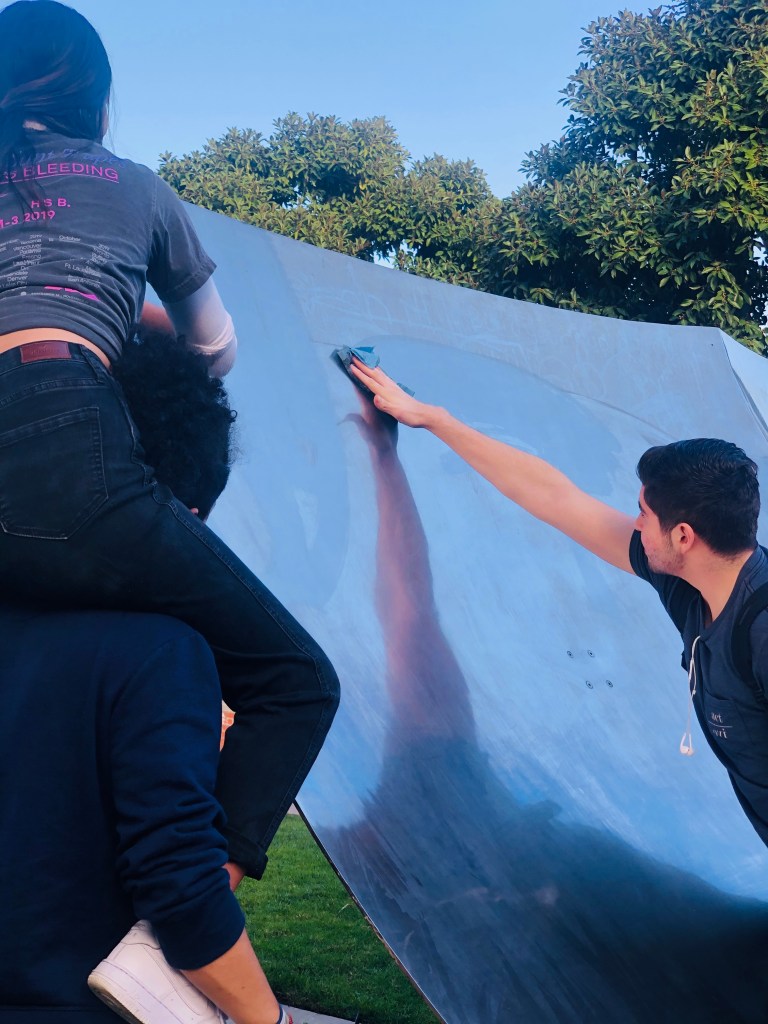
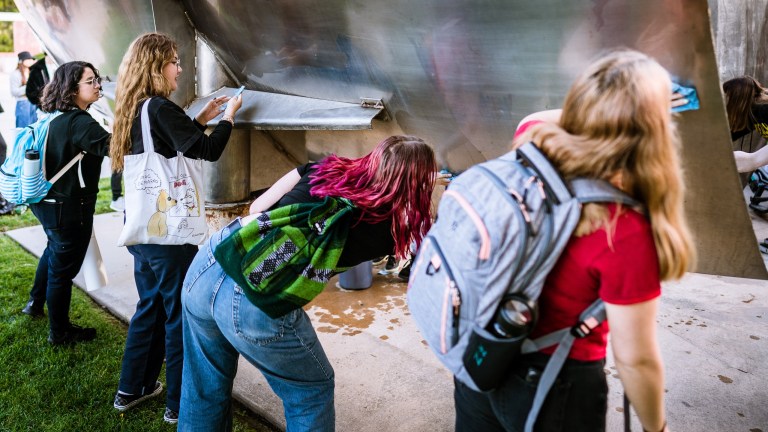
(That’s me in the fourth picture all the way on the left!)
Thinking about Ukeles’ cleaning of the steps of the art museum and Richard Serra flinging molten lead against the walls of an art museum gave me two different views of their intentions. Both actions struck me as art because both had the intention of making an impact. Ukeles’ work was about showing a different point of view by removing obstruction and Serra’s work was about showing a different point of view by creating obstruction. If Ukeles’ work had been done as part of a maintenance job, it may not be considered art because it is not the intention. A large part of what makes art, I believe is the intention. That is not to say that anything without the intention of being art can not be art. There are many things that can qualify something as art, but the intention of it seems to be a large defining factor. Other factors, like the medium, can be defining factors of whether something is art or not. However, that does not mean that all works on canvas are art and that all works not on canvas are not art. Certainly a painted house or a painted ceiling can be art. Art, ultimately is a culmination of intention and perception, a combination of how the creator creates it and how the viewer views it.
The sentence “Womens work” is also art was interpreted by many to mean work that was typically associated with as being performed by women (i.e. cleaning, cooking, housework), is also a form of art. To me, the statement struck as a statement of empowerment. “Women’s work” to me is work performed by a woman. For example, I am a woman and I complete coding assignments and that is my work and therefore is women’s work. In that context, “women’s work” is also art to me is more of a statement of bringing as much importance to the achievements of women as men’s achievements have been. In the past, men have gotten most of the praise as artists, and the statement urges viewers to consider women’s work as art too. Women’s work is art as much as men’s work is art. It all depends on the intention and perception.





 Yazmin's Blog